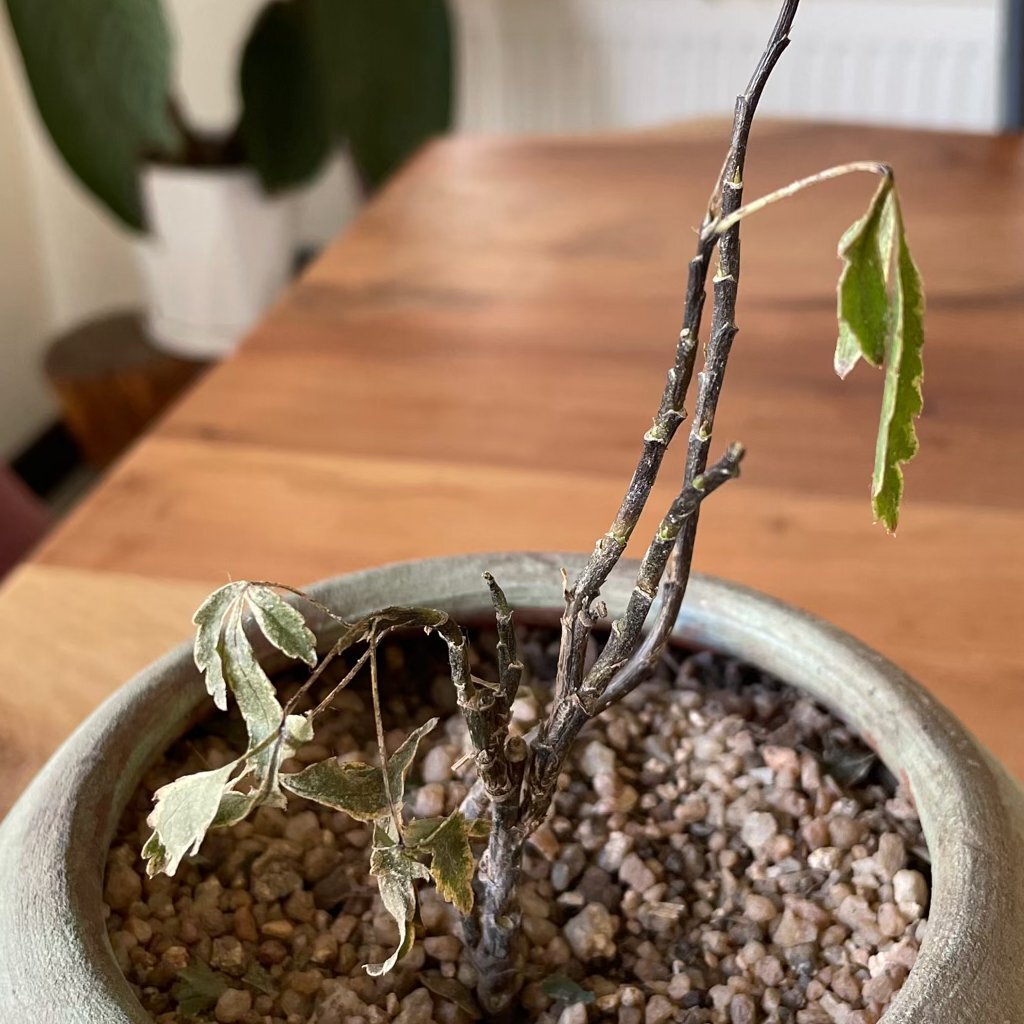
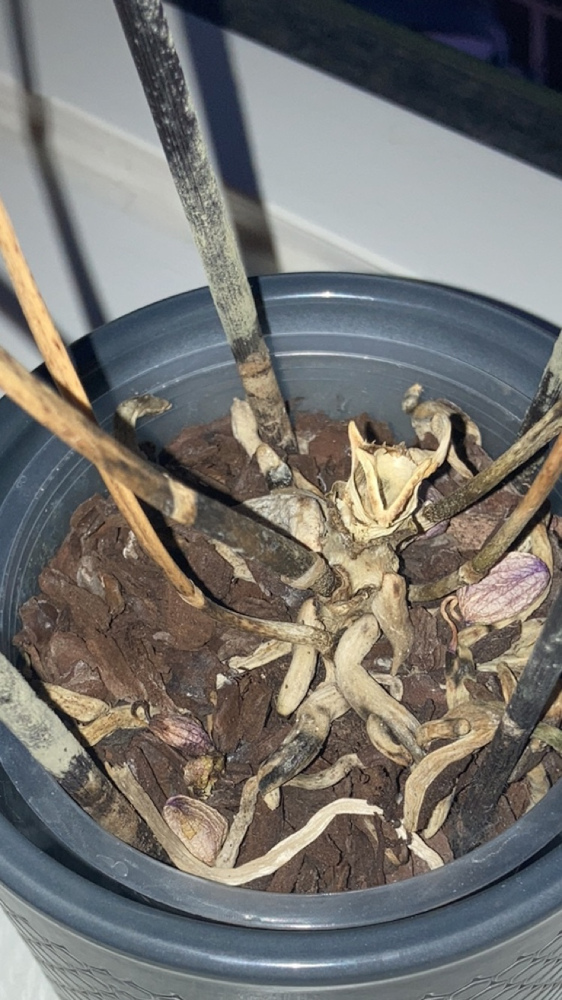
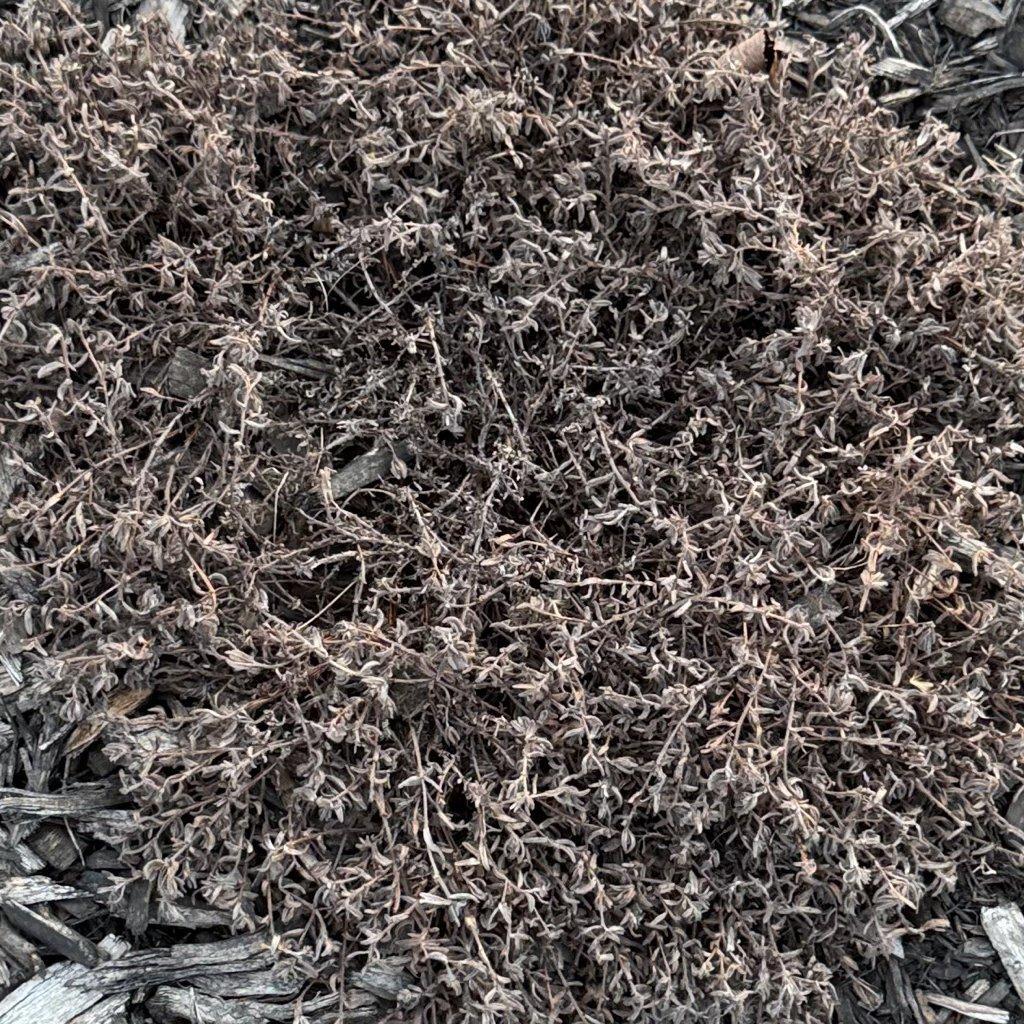
dead plant
What you’re seeing
Complete collapse of stems or rosette, leaves brittle or mushy, no new growth for weeks. Stems snap easily or are hollow and dry; roots are either entirely mushy/detached or dry like straw.
What it is
A plant that has fully lost living tissue above and (often) below the soil line. This can follow extended drought, severe overwatering and rot, frost, heat waves, or long-term neglect.
Is action needed?
If no living tissue remains, revival isn’t possible. Focus on confirming the status and salvaging pots, soil-free tools, and any viable cuttings if present.
How to confirm
- Scratch test (woody stems): Lightly scrape bark. Green and moist = alive; tan/brown and dry = dead.
- Crown/rosette check: Gently pry the central crown. If it detaches with foul smell or is powder-dry and hollow, the growing point is gone.
- Root inspection: Healthy roots are firm and white/tan. All roots dark, mushy, or crisp and hollow suggests no recovery.
- Wait window: If conditions are good and there’s zero new growth for 6–8 weeks in the growing season, treat as non-viable.
What to do
- Stop watering and pruning attempts. Further handling can spread rot and wastes effort.
- Unpot and inspect. If you find any firm white tips or green nodes, you can attempt rescue (see below). If none, move to cleanup.
- Rescue, if tissue is alive:
- Trim to healthy tissue with sterilized shears.
- Repot in fresh, well-draining mix.
- Water lightly once; then allow partial dry-back.
- Provide bright, indirect light and stable warmth (68–77°F / 20–25°C).
- If no living tissue:
- Dispose of the plant responsibly (trash/compost if disease-free).
- Do not reuse old potting mix. Pathogens and salt buildup linger.
- Wash pot and tools with soap + hot water; optionally disinfect (1:10 bleach solution, rinse well).
- Reflect on the likely cause (see Prevention) to succeed next time.
Prevention tips
- Match watering to pot size and mix: small pots dry fast; big pots with dense mix stay wet.
- Use drainage holes and fast-draining media for indoor plants.
- Keep plants within their light and temperature range; avoid drafts and heat blasts.
- Check moisture before watering (finger 2–3 in / 5–7 cm deep or a moisture meter).
- Repot yearly or when mix breaks down.
Related look-alikes to rule out
- Temporary dormancy (some bulbs, cacti): mark the calendar; many resume growth seasonally.
- Severe dieback with a still-living crown or rhizome—do the scratch/root test before giving up.
Images