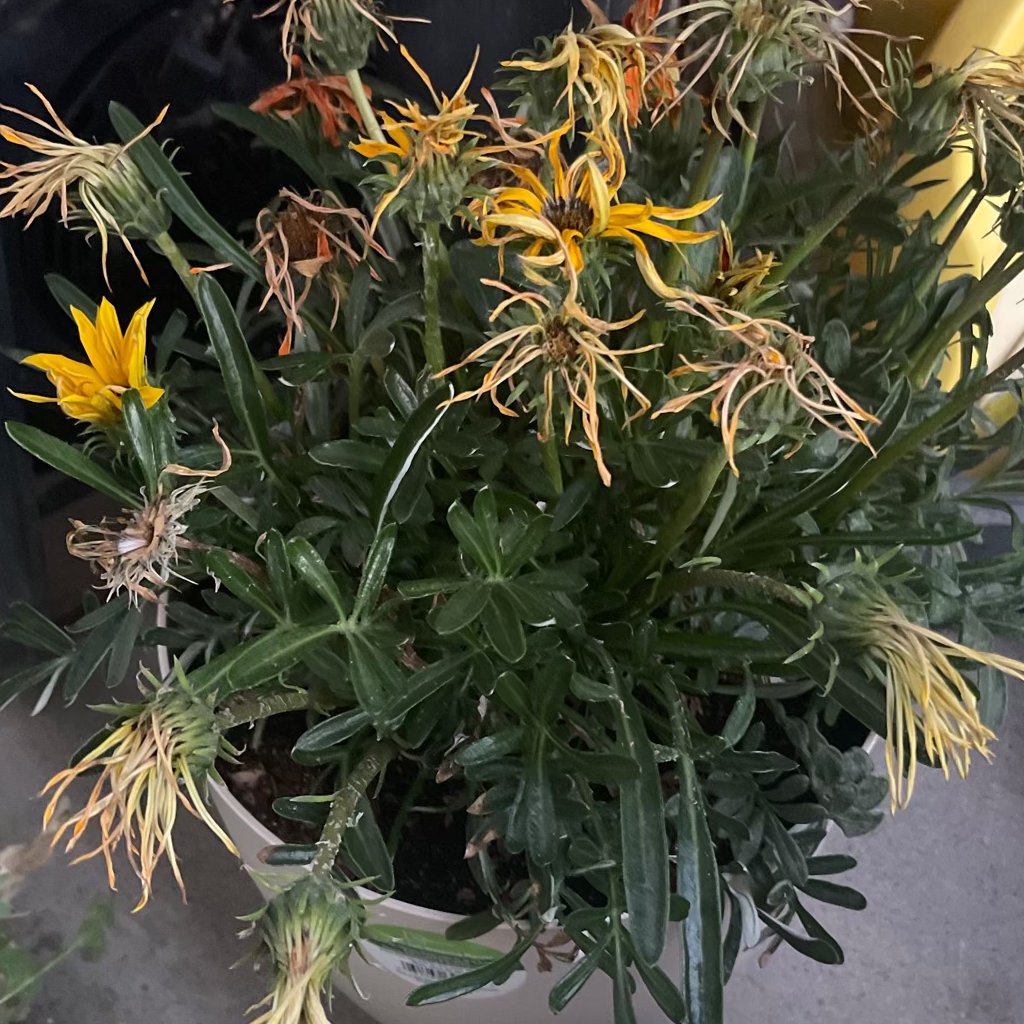
finished flowering period
What you’re seeing
Blooms fade, petals drop, and the plant shifts energy to leaves/stems or seedpods. Flowering pauses even though foliage looks healthy.
What it is
A normal pause after a bloom cycle. Many ornamentals flower in waves or seasons; they can’t bloom continuously without rest or care adjustments.
Is action needed?
Often no urgent action. Gentle maintenance sets the stage for the next cycle.
How to confirm
- Spent flowers present: Brown petals, dry calyces, or seedheads.
- Healthy foliage: New leaves continue; no widespread yellowing or wilt.
- Typical timing: Matches the plant’s usual bloom window (e.g., many winter bloomers rest in spring).
What to do
- Deadhead spent blooms to redirect energy (unless you want seeds/berries).
- Light: Provide bright, indirect light; some bloomers need a few hours of gentle direct sun.
- Nutrition: Resume a balanced, dilute fertilizer (e.g., 1/4–1/2 strength) during active growth.
- Water: Keep consistent—neither soggy nor bone-dry.
- Rest cues: Some species need shorter days/cooler nights to rebloom; research your plant’s typical triggers.
- Repot if root-bound or media is degraded; fresh mix supports the next flush.
Prevention tips
- Track bloom cycles in a simple log; adjust light and feeding before the next flush.
- Avoid heavy pruning right before bud formation.
- Don’t over-fertilize during rest—excess salts can stress roots.
Related look-alikes to rule out
- Bud blast from low humidity or missed watering causes buds to dry before opening.
- Nutrient issues can reduce bloom count.
Images