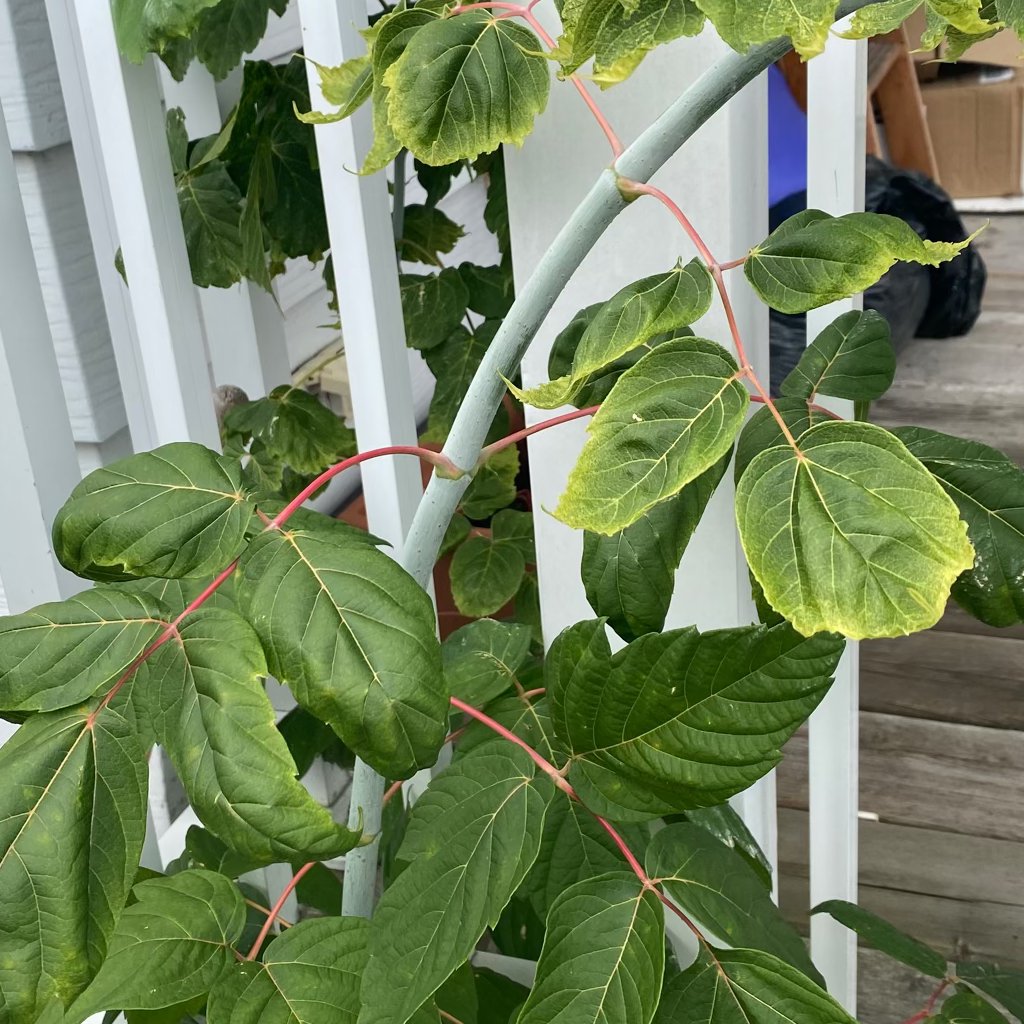
herbicide damage
What you’re seeing
New growth twists, cups, or “fern-fronds”; leaves may narrow, with distorted veins. Symptoms often appear days to weeks after lawn/weed killer use nearby or after using contaminated compost/mulch.
What it is
Exposure to growth-regulator weed killers or other herbicides—via drift, volatilization, residue on tools, or contaminated soil amendments.
Is action needed?
Yes—stop exposure and support recovery. Some cases are reversible; others take months to outgrow.
How to confirm
- Context: Recent yard treatments, neighbor application on a windy day, or manure/compost sourced from treated fields.
- Pattern: Mostly affects new growth first; older leaves may look normal.
- Species sensitivity: Many ornamentals are highly sensitive to even low doses.
What to do
- Cease all exposure; move containers away from treated areas.
- Water thoroughly to dilute residues in pots (if exposure was light). Ensure good drainage.
- Do not prune immediately; observe for 2–4 weeks—new growth may normalize if exposure was minor.
- If soil is contaminated (e.g., suspect compost): Repot with fresh, clean mix.
- Avoid fertilizers for 2–3 weeks while monitoring; resume once normal growth appears.
- Document timing and sources to avoid repeats.
Prevention tips
- Avoid using lawn/weed killers near ornamentals; respect label drift warnings and wind conditions.
- Source compost/manure from herbicide-free suppliers.
- Clean tools and sprayers thoroughly before switching products.
Related look-alikes to rule out
- Pesticide phytotoxicity from soaps/oils burns leaf surfaces but usually doesn’t cause the pronounced twisting typical here.
- Sap-sucking pests can distort new growth—inspect closely for insects.
Images