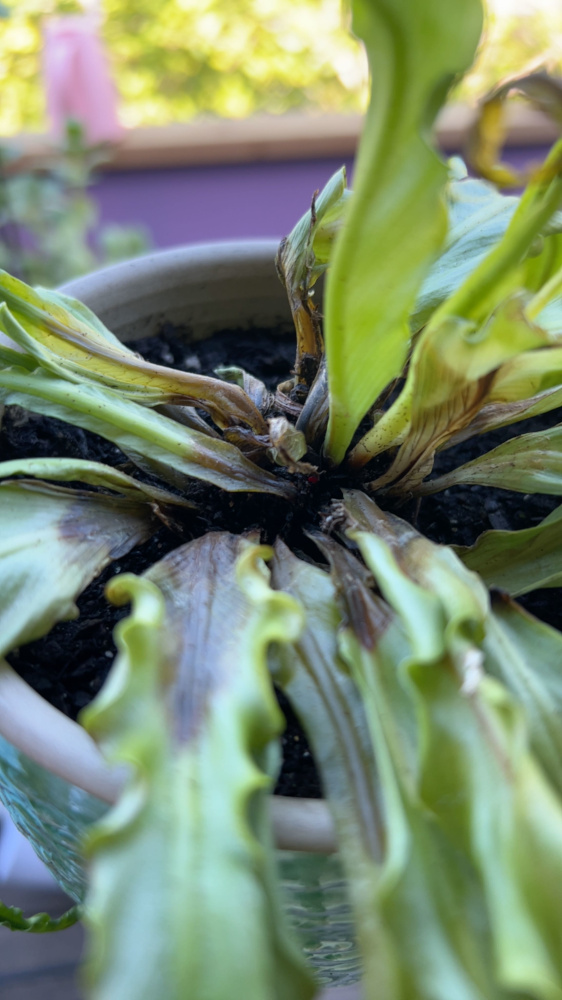
inappropriate leaf rosette watering
What you’re seeing
A rosette-forming plant whose central crown becomes soft, brown, or foul-smelling; new leaves fail to emerge or detach easily. Often occurs after watering directly into the crown.
What it is
Water trapped in the plant’s central rosette or crown promotes rot at the growing point. Some species, such as Saintpaulia (African violet), Echeveria, or Sempervivum, are especially sensitive.
Is action needed?
Yes—protect the crown and adjust watering technique.
How to confirm
- Touch/odor: Crown feels mushy or smells sour.
- History: Water frequently poured into the center or the plant sits in a very humid, stagnant spot.
- Early stage: Outer leaves may still be healthy while the center deteriorates.
What to do
- Wick away water from the crown with paper towel/cotton swab.
- Improve airflow and light (bright, indirect).
- Water at soil level or bottom-water; keep the crown dry.
- If rot is advanced: Remove decayed tissue with sterile tools; dust with a sulfur-based powder (optional); allow the area to dry before resuming gentle watering.
- Repot if the mix is soggy/old, using a fast-draining blend.
Prevention tips
- Water around the pot rim, not into the crown.
- Avoid splashing the center late in the day; cool nights + trapped water = risk.
- Provide a slight tilt so water can’t pool in the rosette.
Related look-alikes to rule out
- Watering on leaves alone doesn’t usually rot the crown unless water sits in the center.
- Pest injury can deform the crown—inspect for sap-feeders if distortion continues after technique changes.
Images