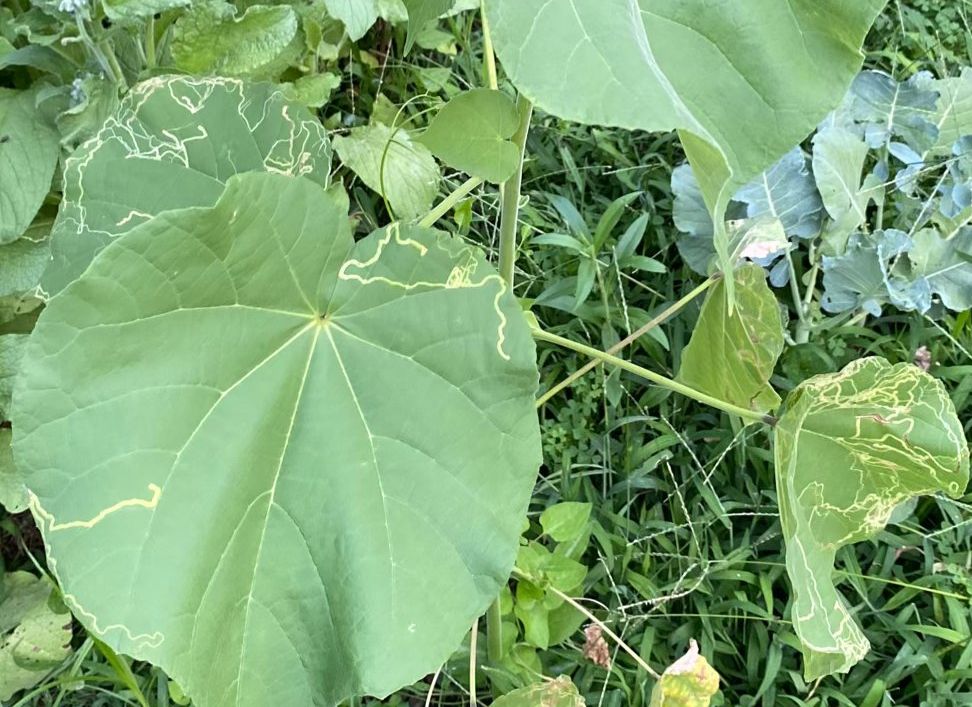
leaf miners
What you’re seeing
Thin, winding, light-colored tunnels within leaves; the upper surface may blister. Lines widen as larvae grow. Affected areas eventually brown.
What it is
Larvae living inside the leaf blade, eating internal tissues. Adult flies or moths lay eggs; larvae tunnel between leaf layers.
Is action needed?
Yes—remove affected tissue and break the life cycle.
How to confirm
- Back-light a leaf: You’ll see serpentine mines; sometimes a tiny larva is visible at the tunnel end.
- Species notes: Common on certain ornamentals and vegetables.
What to do
- Remove and discard mined leaves—bag them; do not compost indoors.
- Crush tunnels on mildly affected leaves to kill larvae in place.
- Sticky cards can monitor adult activity.
- Consider a systemic or labeled product if infestations are heavy (outdoors/greenhouse), following all label directions; avoid systemic insecticides on indoor houseplants and food crops.
- Encourage natural enemies outdoors (avoid broad-spectrum sprays).
Prevention tips
- Inspect new plants closely; mines are easy to miss.
- Keep plants vigorous; stressed leaves are more attractive.
- Use fine mesh covers on susceptible outdoor crops if pressure is high.
Related look-alikes to rule out
- Chewing holes go through the leaf; mines are enclosed between layers.
- Fungal/abiotic blotches lack the winding trail pattern.
Images