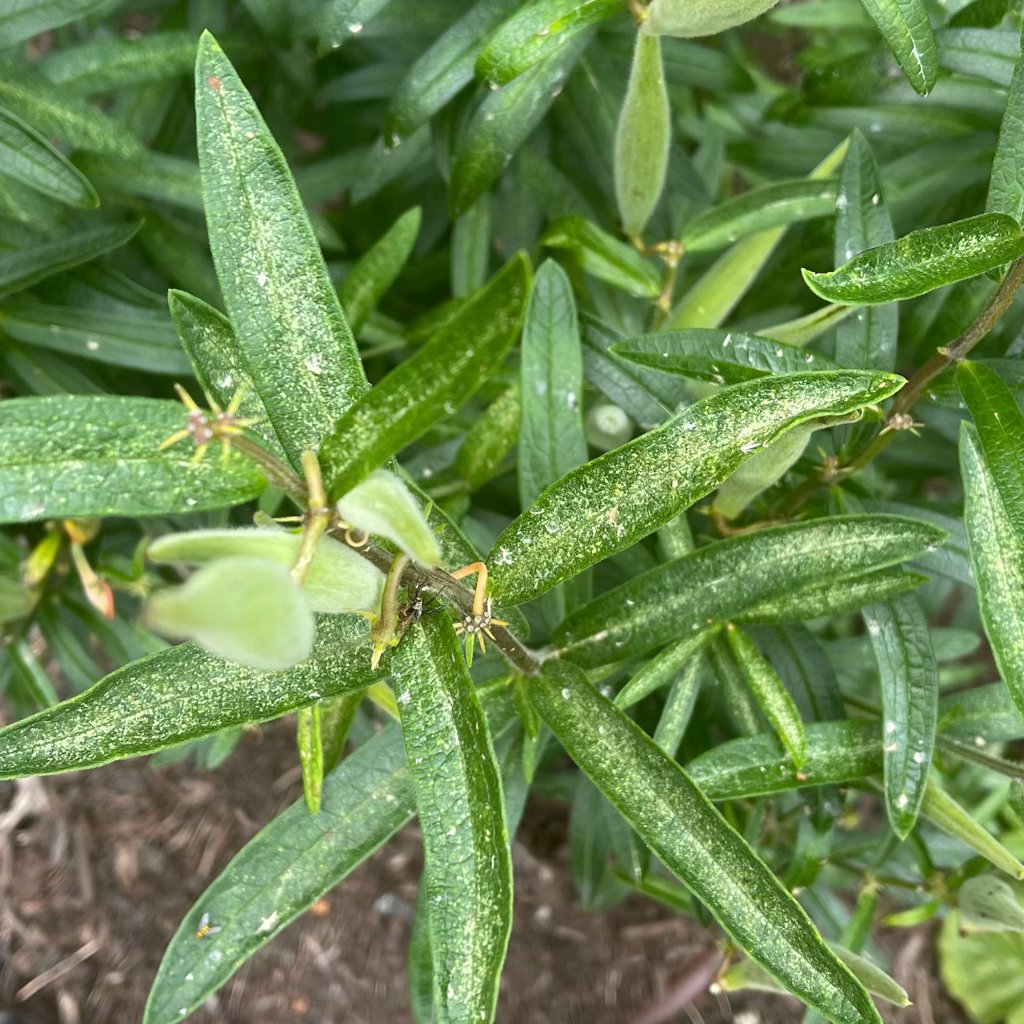
sap-sucking pests
What you’re seeing
Fine speckling, curled or distorted new leaves, sticky residue (honeydew), black sooty mold on surfaces, or tiny moving insects on undersides of leaves/stems.
What it is
A broad group of piercing-sucking insects (e.g., aphids, mealybugs, soft/hard scales, whiteflies, thrips). They remove plant sap, weakening growth and stressing new tissue.
Is action needed?
Yes. Early, gentle control prevents population explosions and leaf loss.
How to confirm
- Visuals: Cottony tufts (mealybugs), waxy bumps (scale), tiny green/black insects (aphids), minute yellow/black slivers (thrips).
- Residue: Sticky honeydew and sooty mold on leaves/floor (aphids, whiteflies, soft scales).
- Movement: Tap a leaf over white paper—thrips/whiteflies often drop or fly.
What to do
- Quarantine the plant away from others.
- Wash: Rinse foliage with lukewarm water; for sturdy leaves, a soapy sponge (a few drops of dish soap in a quart/liter) removes residues and pests. Rinse well. For thrips, use blue sticky traps, gentle leaf rinses, and (where allowed) spinosad.
- Contact controls: Use insecticidal soap or horticultural oil per label; ensure full coverage (upper/lower leaves, stems, nodes). Repeat every 7–10 days for 3–4 rounds to catch life stages. Dab visible mealybugs/scale with 70% isopropyl alcohol on a cotton swab; test first.
- Prune heavily infested parts. Bag and discard.
- Improve conditions: Brighten light and avoid over-fertilizing soft, lush growth that attracts pests.
- Monitor nearby plants for several weeks.
Prevention tips
- Inspect new plants for cottony clusters or sticky leaves.
- Avoid moving infested plants through the collection; treat in place.
- Keep foliage dust-free so beneficial rinses and sprays contact pests.
Related look-alikes to rule out
- Feeding holes (chewers) vs. stippling/honeydew (piercing-sucking).
- Hard water residue can mimic honeydew—sticky feel distinguishes true honeydew.
Images